The New Rules of Money: Navigating Personal Finance in a High-Debt, Low-Savings Era
For the last two decades, the personal finance playbook was remarkably simple. You were told to follow the 50/30/20 budgeting rule, max out your 401(k), put your emergency fund in a standard savings account, and wait for the stock market to make you wealthy. It was clean, it was easy to remember, and it worked beautifully in an era of near-zero interest rates and stable inflation.
That era is gone.
As we navigate 2026, the economic reality for the average household has fundamentally shifted. U.S. consumers collectively owe a staggering $18.33 trillion in total debt, a record high that includes ballooning credit card balances and stubborn mortgage loads [[12]]. Meanwhile, the average personal savings rate has plummeted to just 4.6%, leaving millions of families one unexpected medical bill or car repair away from financial ruin [[20]].
The old advice is not just outdated; in many cases, it is actively harmful. If you are trying to manage your money using a playbook written in 2015, you are playing a different game. Here is the data-backed, modern approach to personal finance that actually works in today’s high-cost, high-debt environment.
The Death of the 50/30/20 Rule (And What Replaces It)
The 50/30/20 rule dictates that you should spend 50% of your after-tax income on needs, 30% on wants, and 20% on savings and debt repayment. It is a great conceptual framework, but it is mathematically impossible for a growing segment of the population.
When housing costs, health insurance premiums, and basic groceries consume 60% or 70% of your paycheck, the 50% cap on “needs” is a fantasy. Trying to force your budget into this rigid box only leads to frustration and a sense of failure.
The Modern Fix: “Reverse Budgeting” and the “Core + Flex” Model
Instead of obsessing over percentages, modern financial planning focuses on prioritizing cash flow.
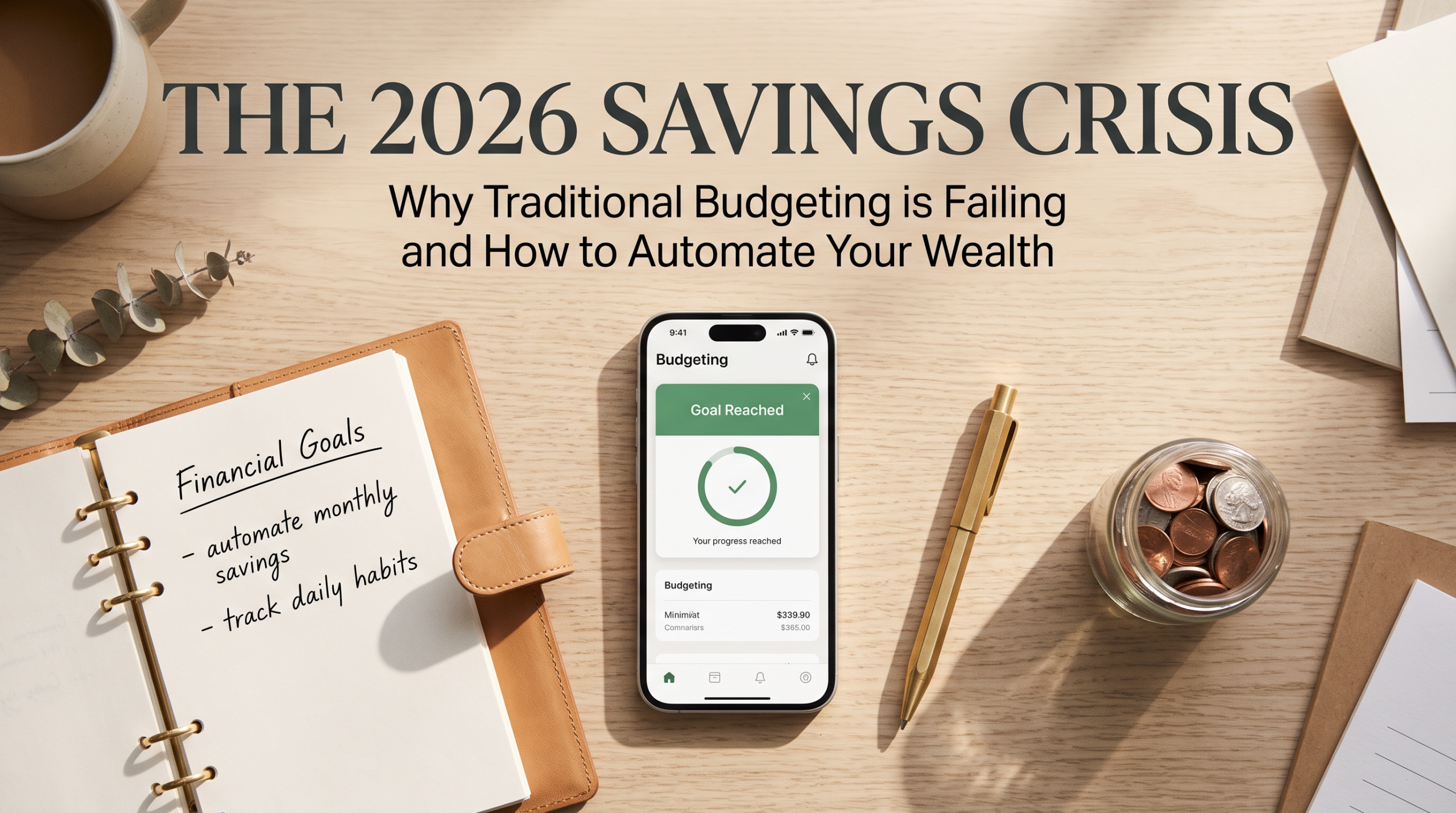
- Reverse Budgeting: Automate your financial goals first. Set up automatic transfers to your savings, investment accounts, and extra debt payments on payday. Whatever is left in your checking account is yours to spend guilt-free on “needs” and “wants.” You save first, and spend the rest, eliminating the need to track every single coffee.
- The Core + Flex Model: Fund your “Core” non-negotiables first (rent, utilities, minimum debt payments, and a starter $1,000 emergency fund). Once those are secure, allocate your remaining “Flex” income based on your current life stage—aggressively attacking high-interest debt if you are in your 20s, or maximizing retirement catch-up contributions if you are in your 50s.
Tackling the $18.33 Trillion Elephant: Strategic Debt Payoff
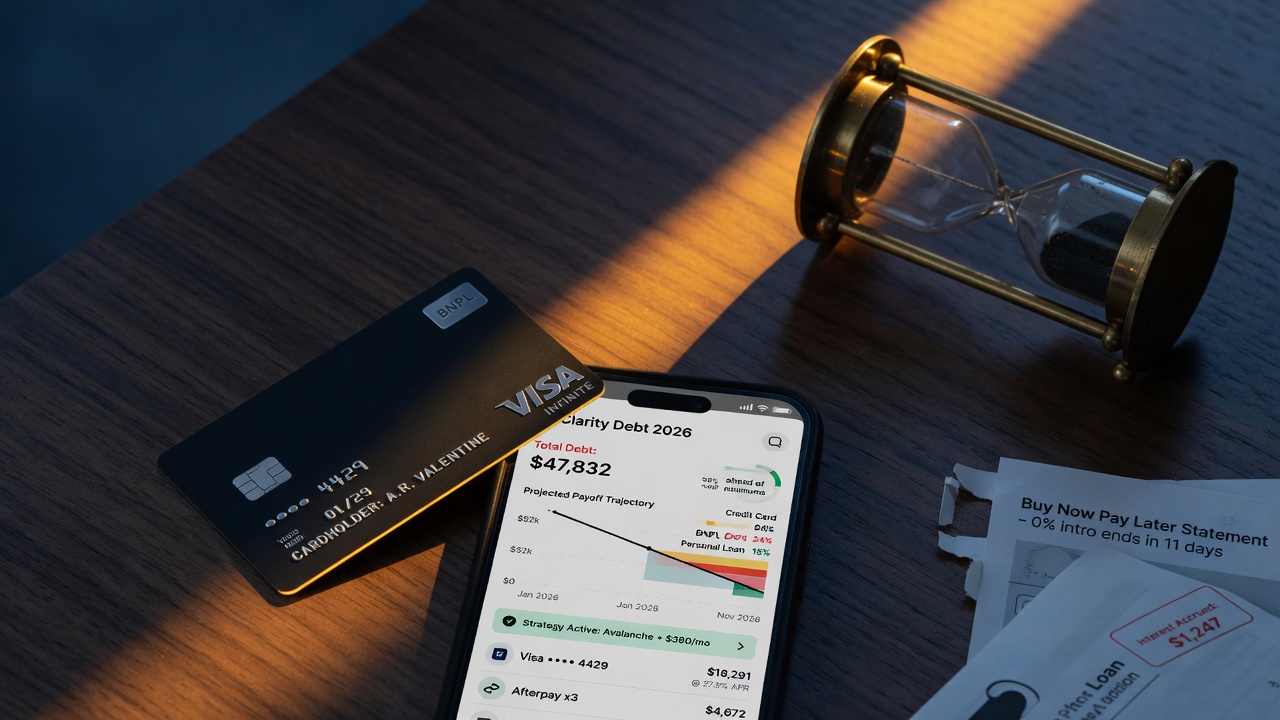
With total consumer debt at record highs, and credit card interest rates hovering in the punishing 20% to 24% range, carrying a balance is a financial emergency. The math is brutal: at a 22% APR, a $5,000 credit card balance paid off at the minimum payment will take over 20 years to clear and cost you nearly $7,000 in interest alone.
The Modern Fix: The Avalanche vs. The Balance Transfer
If you are carrying multiple debts, you need a systematic attack plan.
- The Avalanche Method: List all your debts from highest interest rate to lowest. Pay the minimum on everything, but throw every extra dollar at the highest rate. Mathematically, this saves you the most money and gets you out of debt the fastest.
- The 0% APR Balance Transfer: If you have a good credit score (typically 670+), apply for a 0% introductory APR balance transfer card. These cards often offer 15 to 21 months of zero interest. Transfer your high-interest credit card debt to this new card, and use the 18-month window to aggressively pay down the principal without a single penny going toward interest. Just be sure to factor in the 3% to 5% balance transfer fee, and never miss a minimum payment, or you will lose the promotional rate.
The “High-Yield” Reality Check: Where to Actually Put Your Cash
A few years ago, keeping your emergency fund in a traditional big-bank savings account earning 0.01% was the norm. Today, that is financial negligence. High-Yield Savings Accounts (HYSAs) offered by online banks and credit unions are routinely paying between 4% and 5% APY.
However, there is a catch. While a 4.5% return sounds great, if inflation is running at 3%, your “real” return is only 1.5%. To truly protect your purchasing power, you need to look slightly beyond the standard HYSA for your medium-term savings (money you will need in 1 to 3 years, like a house down payment).
The Modern Fix: Treasury Bills and CD Laddering
- Treasury Bills (T-Bills): Short-term U.S. government debt is currently offering highly competitive yields, and the interest earned is exempt from state and local income taxes. For high earners in states like California or New York, this tax advantage makes T-Bills significantly more lucrative than a standard HYSA.
- CD Laddering: If you want to lock in today’s rates before they potentially drop, build a “ladder” of Certificates of Deposit (CDs). Buy a 6-month CD, a 12-month CD, and an 18-month CD. As each one matures, reinvest it into a new 18-month CD. This gives you regular access to your cash while capturing the highest possible long-term rates.
Automate Your Financial Autopilot
The greatest threat to your financial plan is not a market crash or an economic recession; it is human psychology. We are wired to prioritize immediate gratification over long-term security. Willpower is a finite resource, and if you have to manually decide to save money every single month, you will eventually fail.
The Modern Fix: Build the “Set It and Forget It” Infrastructure
Separate your checking from your spending. Open a dedicated, high-yield savings account at a completely different bank than your primary checking account. If the money is not instantly visible when you log in to pay a bill, you are less likely to impulse-spend it. Set up automatic transfers for the day after your paycheck hits. Treat your savings contribution like a mandatory bill that must be paid before you are allowed to buy groceries or go out to dinner.
Sources & References
- [12] Experian. (2025/2026). Financial Trends for 2026: U.S. consumers collectively owed $18.33 trillion in total debt. Retrieved from experian.com
- [13] Siebert. (2026). The 50/30/20 Rule: Smart Budgeting or Outdated Advice? Retrieved from blog.siebert.com
- [20] Investopedia. (2025/2026). Mastering the 50/30/20 Rule: The average personal savings rate for individuals in the United States was only 4.6% in August 2025. Retrieved from investopedia.com
The Bottom Line
Personal finance in 2026 is not about depriving yourself of every joy to hoard pennies. It is about building a resilient, automated system that protects you from inflation, crushes high-interest debt, and aligns your spending with your actual reality, not a textbook formula from a decade ago. Ditch the outdated rules, automate your infrastructure, and take control of the $18.33 trillion game.