
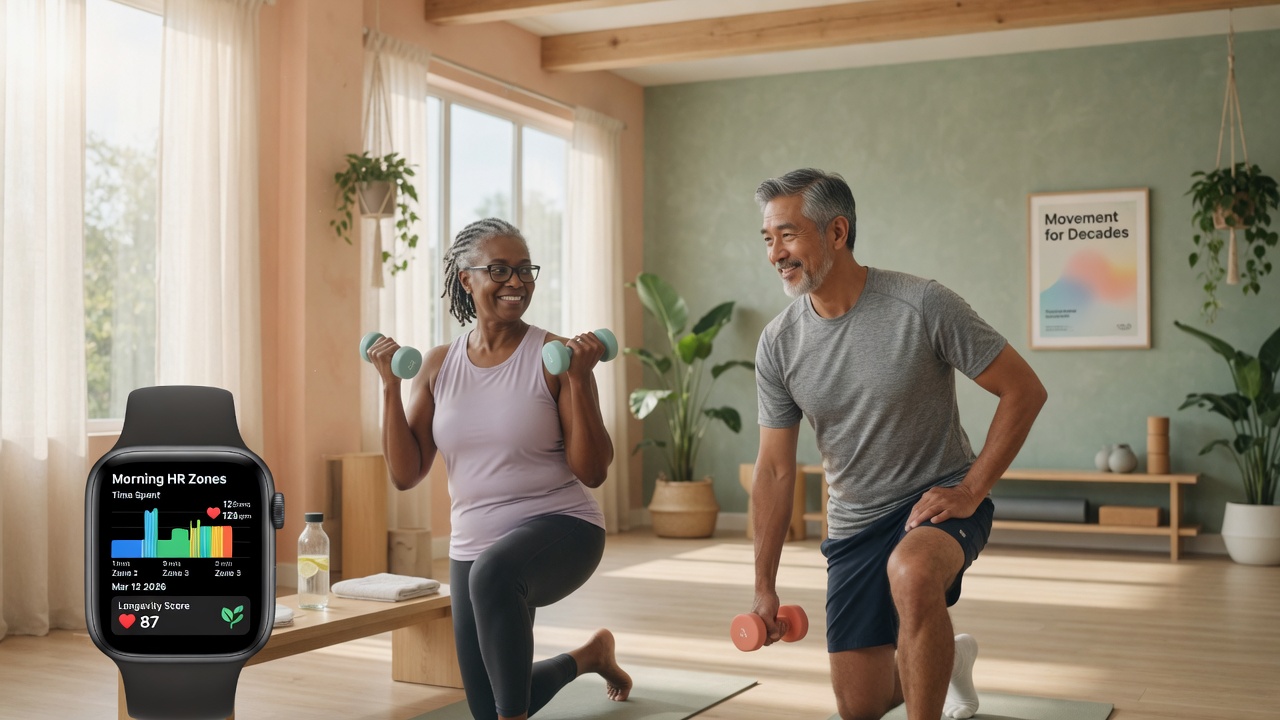
The Longevity Shift: Why Sustainable Fitness and Strength Training Are Dominating 2026
For decades, the fitness industry was driven by a single, exhausting mantra: “no pain, no gain.” The cultural narrative equated wellness with suffering, pushing extreme calorie deficits, punishing high-intensity interval training (HIIT) every day of the week, and aesthetic perfection as the ultimate goals. If you weren’t sore the next day, you weren’t trying hard enough.
In 2026, that paradigm has completely collapsed.
A massive cultural and scientific shift is underway, moving the focus away from short-term aesthetic fixes and toward “longevity fitness.” This approach frames physical activity not as a punishment for what you ate, but as the primary vehicle for extending your healthspan—the number of years you live in good health, free from chronic disease and physical decline.
The data confirms this is not just a passing wellness fad. Global wearable device shipments reached 611.5 million units in 2025, and the metrics people are tracking have fundamentally changed [[2]]. Users are no longer just counting steps or calories burned; they are monitoring heart rate variability (HRV), sleep quality, and “Fitness Age” to optimize long-term health [[7]].
If you want to build a fitness routine that actually serves you for the next 40 years, you need to update your playbook. Here are the data-backed fitness and wellness trends defining 2026, and how you can apply them to your life.
1. The Mainstreaming of “Zone 2” Training
If you have spent any time in the fitness space recently, you have likely heard the term “Zone 2.” Once a secret weapon reserved for elite endurance athletes, Zone 2 training has exploded into the mainstream, and for good reason.
Zone 2 refers to exercising at a moderate intensity, typically keeping your heart rate at 60% to 70% of its maximum [[15]]. The golden rule of Zone 2 is the “conversational pace”: you should be working hard enough to break a sweat, but still able to speak in full sentences without gasping for air [[15]].
Why It Works: At this specific intensity, your body optimizes its mitochondrial function. Mitochondria are the powerhouses of your cells, and training in Zone 2 teaches your body to efficiently burn fat for fuel while sparing carbohydrates. This builds a massive aerobic base, improves metabolic health, and, crucially, generates very little systemic fatigue or injury risk compared to high-intensity workouts [[11]].
The Fix: You do not need to run a marathon to get the benefits. Aim for 150 to 180 minutes of Zone 2 cardio per week. This can be achieved through brisk walking on an incline, easy cycling, rowing, or light jogging. The key is consistency and resisting the urge to speed up. If you are gasping for air, you have left Zone 2.
2. The Strength Training “Sweet Spot” for Longevity
Cardio gets a lot of attention, but strength training is the undisputed king of healthy aging. As we age, we naturally lose muscle mass and bone density, a condition known as sarcopenia. This decline is the primary driver of frailty, falls, and loss of independence in older adults [[26]].
However, you do not need to spend hours in the gym lifting heavy weights to combat this. Recent research has identified a highly efficient “sweet spot” for strength training. A major study tracking long-term health outcomes found that just 30 to 60 minutes of strength training per week is associated with a 10% to 20% lower risk of all-cause mortality [[28]]. Another 2026 analysis confirmed that 90 to 120 minutes a week may deliver the absolute biggest long-term health rewards, including improved insulin sensitivity and bone integrity [[23]].
The Fix: Prioritize compound movements that work multiple muscle groups simultaneously. Squats, deadlifts, push-ups, rows, and overhead presses should form the core of your routine. Aim for two to three sessions per week, focusing on progressive overload (gradually increasing the weight or reps over time). You are not training to be a bodybuilder; you are training to be a resilient, capable human at age 80.
3. Wearables Have Evolved from Trackers to Health Coaches
The first generation of fitness wearables was essentially a digital pedometer. The 2026 generation of wearables is a comprehensive, AI-driven health dashboard. The healthcare wearables sector is experiencing explosive growth, projected to expand significantly as devices integrate deeper with clinical health metrics [[5]].
Modern devices from brands like Garmin, Apple, and Oura are no longer just telling you what you did; they are telling you how to recover. Metrics like Heart Rate Variability (HRV), resting heart rate, and sleep staging are being used to generate daily “readiness” scores. If your HRV is low and your resting heart rate is elevated, the device will actively discourage you from doing a heavy HIIT workout and suggest a Zone 2 walk or yoga session instead.
The Fix: Stop obsessing over closing arbitrary “rings” or hitting a specific step count every single day, regardless of how you feel. Use your wearable data to practice autoregulation. Let your biometric data dictate the intensity of your workout. Some days, pushing hard is exactly what your body needs. Other days, the most productive thing you can do for your fitness is to prioritize deep rest.
4. The Integration of Mobility and Breathwork
Longevity fitness recognizes that being strong and having a high VO2 max is useless if you cannot tie your own shoes or manage daily stress. As a result, modalities that focus on joint health, stability, and nervous system regulation are seeing massive adoption.
Pilates, for example, remains a powerhouse in the 2026 wellness landscape specifically because of its focus on stability, posture, core strength, and breathwork, making it a cornerstone of longevity fitness [[4]]. Similarly, dedicated mobility routines (dynamic stretching, foam rolling, and joint circles) are no longer treated as an optional warm-up, but as a mandatory pillar of the weekly training schedule.
The Fix: Dedicate at least 10 to 15 minutes, three times a week, to dedicated mobility work. Focus on the areas that modern life tightens the most: hip flexors, thoracic spine (upper back), and shoulders. Pair this with 5 minutes of controlled, diaphragmatic breathing to actively down-regulate your nervous system after a stressful day.
Sources & References
- [2] Fab Glass and Mirror. (2026). The 2026 Fitness Industry Trends: Global wearable device shipments reached 611.5 million units in 2025. Retrieved from fabglassandmirror.com
- [4] Active Wellness. (2025/2026). 20 Wellness Trends Shaping How We Move & Feel in 2026: Pilates remains a powerhouse thanks to its focus on stability, posture, strength, and breathwork. Retrieved from activewellness.com
- [5] LinkedIn Top Content. (2026). Trends in Fitness Technology: The healthcare wearables sector is exploding. Retrieved from linkedin.com
- [7] Athletech News. (2026). Unlocking New Revenue Streams with Garmin: Fitness Age makes it simple for users to understand how fit they are. Retrieved from athletechnews.com
- [11] Zone Training Log. (2026). What Is Zone 2 Training? Zone 2 is useful because it lets you train the aerobic system with a favorable ratio of stimulus to fatigue. Retrieved from zonetraininglog.com
- [15] GQ / Fab Glass and Mirror. (2026). Why Easy ‘Zone 2’ Workouts Became the Biggest Thing: Keeping your heart rate in a moderate, conversational range, roughly 60–70% of your max. Retrieved from gq.com
- [23] Science Daily. (2026). Scientists found the strength training sweet spot for longevity: Just 90–120 minutes of strength training a week may deliver some of the biggest long-term health rewards. Retrieved from sciencedaily.com
- [26] AARP. (2026). 4 Types of Exercise You Need as You Age: Strength training helps preserve your muscles and improves bone density, potentially reducing your risk for osteoporosis, fractures and falls. Retrieved from aarp.org
- [28] Harvard School of Public Health. (2022/2026). Evidence mounts on the benefits of strength training: Those who worked out for 30 to 60 minutes a week had a 10% to 20% lower risk of all-cause mortality. Retrieved from hsph.harvard.edu
The Bottom Line
The goal of fitness in 2026 is not to look like a fitness model for a summer vacation. The goal is to build a resilient, capable body that allows you to hike with your grandchildren, carry your own groceries at age 80, and wake up without chronic joint pain. By embracing Zone 2 cardio, hitting the strength training sweet spot, listening to your wearable data, and prioritizing mobility, you are not just working out. You are investing in your future self.