
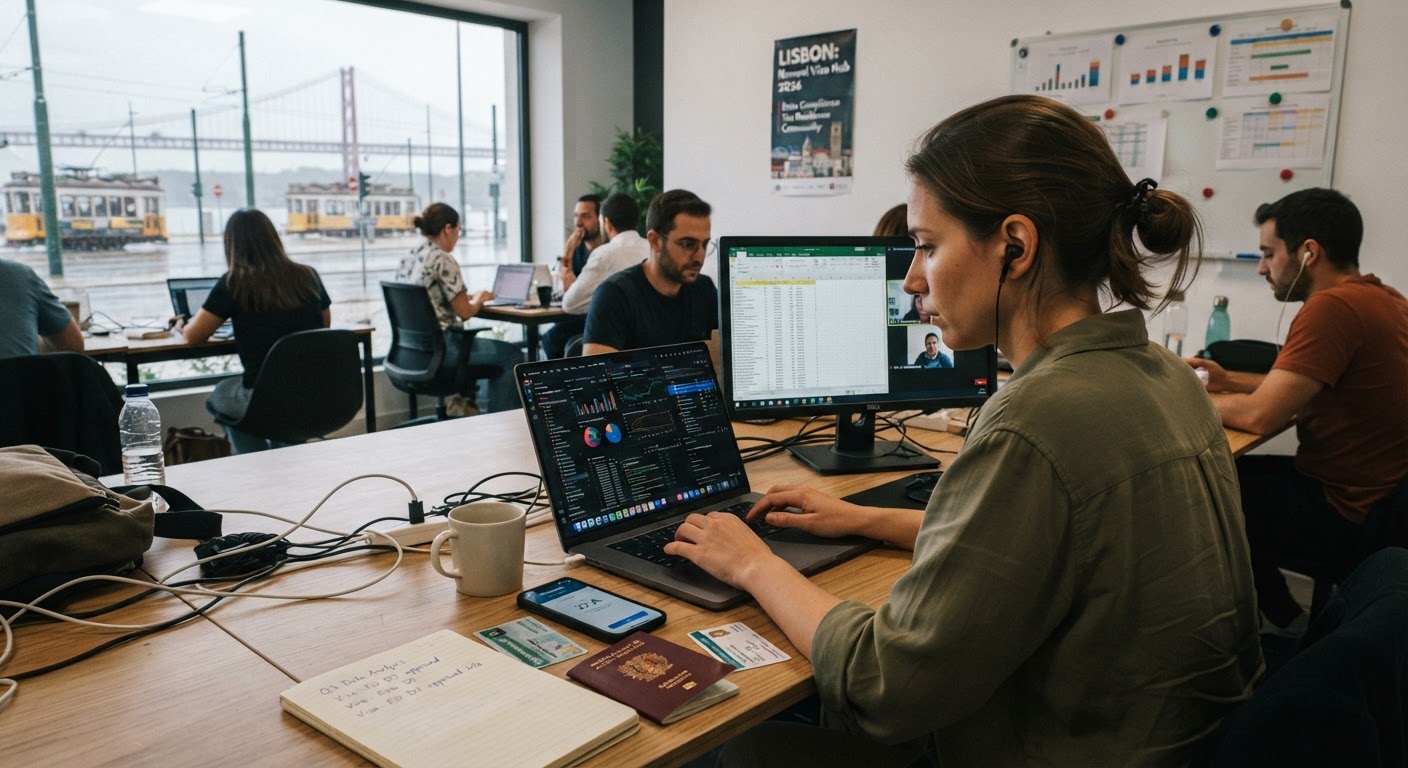
The Reality of the Digital Nomad Life in 2026: Data, Visas, and the End of the “Beach Office” Myth
If you search for “digital nomad” on social media, you will be greeted by a relentless feed of laptops on sunbeds, infinity pools, and cocktails with umbrellas. It is a highly curated, visually intoxicating illusion that has sold millions of people on the dream of location independence.
But the reality of the digital nomad life in 2026 looks very different. It looks like debugging Wi-Fi routers in a rural Portuguese village. It looks like navigating complex international tax treaties. It looks like paying for premium international health insurance and attending structured networking events just to find a community.
The “beach office” is a myth. But the actual lifestyle—when approached with strategic intent and a clear understanding of the logistics—is more accessible and sustainable than ever before. The global digital nomad population has surged to an estimated 35 to 40 million people worldwide, and the infrastructure supporting them has matured from a niche subculture into a recognized economic sector.
If you are considering trading your cubicle for a co-working space in Lisbon or Medellin, you need to look past the filters. Here is the data-backed reality of the digital nomad lifestyle in 2026.
The Numbers: How Big is the Nomad Economy?
The days of digital nomads being a fringe group of freelance writers and graphic designers are over. The demographic has diversified massively. Today, it includes software engineers, marketing executives, financial analysts, and even full-time corporate employees who have negotiated permanent remote work agreements with their headquarters.
Estimates place the global digital nomad population between 35 and 40 million in 2025/2026, a staggering increase from the pre-pandemic era. This is not just a lifestyle choice; it is a macroeconomic force. Nomads inject billions of dollars into local economies every year. Because they earn foreign currency (often in USD, GBP, or EUR) and spend it in lower-cost-of-living destinations, they create a powerful form of geographic arbitrage that benefits both the worker and the host country.
This economic impact is exactly why governments are no longer viewing remote workers as a loophole to be closed, but as a lucrative demographic to be courted.
The Visa Boom: Why Countries are Fighting for You
Five years ago, digital nomads were technically operating in a legal gray area, often working on standard tourist visas and risking deportation if caught. Today, the landscape has completely transformed.
As of 2026, over 50 countries and territories offer specific Digital Nomad Visas (DNVs) or remote work permits. From Estonia, which pioneered the concept, to sunny destinations like Spain, Portugal, Croatia, and Costa Rica, governments have realized that remote workers are the ideal immigrants: they bring foreign capital, require no local jobs, and pay for their own housing and services.
The Catch: These visas are not a free pass to avoid taxes. Most DNVs require you to prove a minimum monthly income (often ranging from $2,000 to $4,000+), have clean criminal records, and carry valid health insurance. Furthermore, many of these visas explicitly state that you cannot provide services to local companies in the host country. You are there to spend your foreign money, not to take local jobs. If you violate this, you risk visa revocation and bans.
The Hidden Costs: Taxes, Healthcare, and the “Geo-Arbitrage” Trap
The biggest misconception about the digital nomad life is that moving to a cheaper country automatically makes you wealthy. While your day-to-day living expenses (rent, food, transport) might drop by 50% to 70%, your fixed administrative costs can actually increase.
The 183-Day Tax Trap: Most countries operate on a “183-day rule.” If you spend more than 183 days in a calendar year in a specific country, you automatically become a tax resident there, liable for their local income taxes. Nomads who constantly move to avoid this trap often accidentally trigger tax residency in their home country, or worse, become “tax nowhere” individuals, which can lead to severe legal and financial penalties. You must consult a cross-border tax specialist before you book your first flight.
Healthcare Realities: Standard travel insurance is designed for short trips and emergencies. It does not cover routine check-ups, pre-existing conditions, or long-term care. As a full-time nomad, you need comprehensive international health insurance (like Cigna Global, SafetyWing, or Genki). These premiums can cost anywhere from $100 to $300+ per month, depending on your age and coverage needs. This is a fixed cost that does not disappear just because you moved to Southeast Asia.
The Loneliness Epidemic: Why Community is the New Currency
Nobody talks about the mental health toll of the digital nomad lifestyle. Studies and surveys consistently show that while nomads report high levels of freedom and adventure, they also report significantly higher levels of loneliness and social isolation compared to settled populations.
When you move every three months, you are constantly saying goodbye. You miss weddings, birthdays, and the deep, slow-building friendships that require physical proximity and time. The “workation” lifestyle is incredibly lonely if you do not actively engineer a social life.
The Fix: The most successful nomads in 2026 have abandoned the “move every month” model in favor of “slow-mading.” They stay in one location for three to six months. This allows them to establish a routine, join a local gym or hobby group, and build actual friendships rather than just collecting superficial co-working acquaintances. Furthermore, the rise of purpose-built co-living spaces (like Selina, Outsite, or local nomad hubs) has provided a crucial infrastructure for community, offering built-in social events and networking opportunities that combat isolation.
How to Actually Make the Transition
If you have read all of this and still want to make the leap, you need a strategic roadmap. Do not just quit your job and buy a one-way ticket.
- Secure the Income First: Do not become a nomad to “find yourself” or “figure out how to make money.” You need a stable, location-independent income stream before you leave. This means a remote job, a roster of freelance clients, or a profitable online business.
- Audit Your Time Zone: If your job requires you to be on Zoom calls from 9 AM to 5 PM EST, living in Bali means you will be working from 9 PM to 5 AM. Choose your destinations based on time zone compatibility, not just the cost of a beer.
- Build a “Home Base”: Even the most dedicated nomads need a place to store their physical belongings, receive mail, and return to when they are burnt out. Maintain a minimal storage unit or a family home base in your home country.
The Bottom Line
The digital nomad life in 2026 is not a permanent vacation. It is a highly logistical, deeply rewarding, and occasionally lonely lifestyle choice. It requires you to be your own HR department, your own tax accountant, and your own community builder. If you are willing to put in the administrative work, the freedom to design your life on your own terms is entirely within your reach. Just leave the laptop on the desk, and keep the sand off the keyboard.